Battle of Red Cliffs
The Romance of the Three KingdomsThe Battle of Red Cliffs turns a contest over the river into a decisive defeat for Cao Cao: Zhou Yu’s forces exploit a feigned defection and a change in the wind to ignite the chained ships, while coordinated attacks on land prevent the retreat from becoming orderly. The episode’s action is built from preparations, signals, and reversals. What Cao Cao reads as a welcome surrender is the opening move of an attack; what appears to be a route to safety repeatedly becomes a new point of danger.
Strategic Preparations
The attack begins with a distributed plan rather than a single strike. Zhou Yu sends Gan Ning with Cai Zhong to destroy Cao Cao’s grain supply, instructing them to fly northern banners so that they can deceive the enemy. Taishi Ci is sent toward Huangzhou to intercept Cao Cao’s men near Hefei, with a red banner designated as the sign that Sun Quan’s troops have arrived. Lü Meng is assigned to help Gan Ning burn Cao Cao’s main camp. Other detachments are sent toward Yiling and Hanyang, where they can strike the enemy along the river. These assignments make the battle a coordinated operation across water, camp, and approaches rather than an isolated naval engagement.
Huang Gai prepares the fireboats and sends Cao Cao a letter announcing that he will abandon Zhou Yu and come over that night. His apparent change of allegiance is meant to bring the attacking vessels close to Cao Cao’s fleet under the guise of a defection. Zhou Yu’s preparations also include action against suspected deception within his own camp: Cai He is brought before him, accused of pretending to join the southern side as a trick, and executed. Only after this does the fleet set sail. The episode links the attack’s timing to a concern about reliable allegiance and the control of information.
The Feigned Defection and the Fire Attack
Cao Cao receives Huang Gai’s letter while waiting for confirmation that the defection is real. The wind has shifted to the southeast, but he is not alarmed. The letter promises more than Huang Gai’s arrival: it says he will also capture grain ships supplying Zhou Yu’s army and bring them as tribute. Cao Cao’s anticipation of a useful surrender makes him receptive to the cover story.
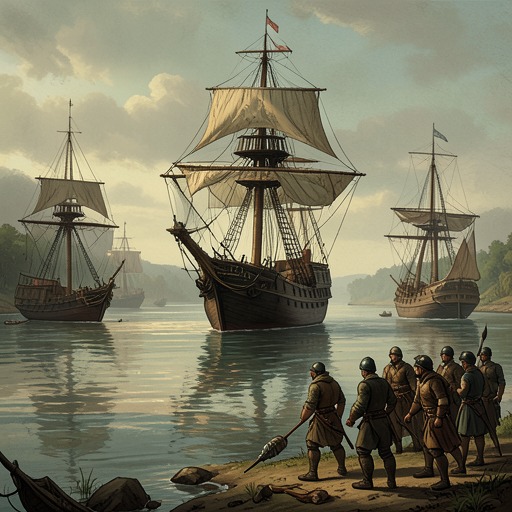
Huang Gai approaches the area known as Red Cliffs in full battle armor, aboard a vessel displaying his name and title as vanguard. Cao Cao takes the sight as confirmation of the promised surrender and interprets it as a sign of Heaven’s will. Cheng Yu recognizes the danger: vessels carrying grain would sit much lower in the water, whereas these are light and moving quickly with the wind. Cao Cao understands that he has been deceived and calls for an attempt to stop the approach. Wen Ping takes a small flotilla of about a dozen ships toward the armada, but an arrow strikes him and his force withdraws in disorder.
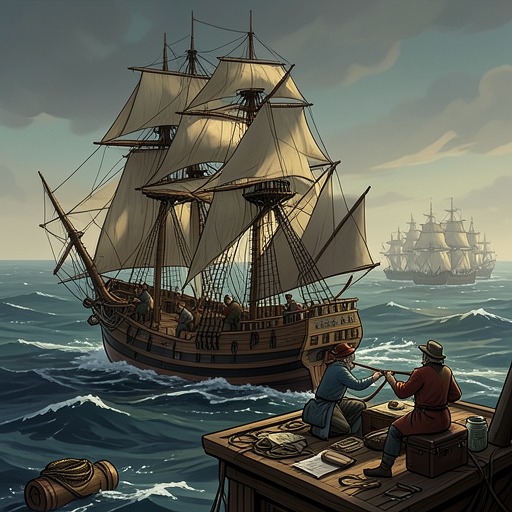
At Huang Gai’s signal, the fireboats are set alight and driven by the wind toward Cao Cao’s navy. Twenty strike the chained ships. Because the vessels are linked together, the fire spreads rapidly from one to another, leaving little opportunity for the fleet to separate and escape. Catapults from the southern shore add to the attack. The concentration of ships that had made Cao Cao’s fleet a formidable force instead helps the flames travel through it, converting the river position into a trap.
Assaults Across the Battlefield
The attack is not confined to the fleet. On land, Gan Ning gets deep into Cao Cao’s camp by persuading Cai Zhong that he intends to defect. Once inside, Gan Ning kills Cai Zhong and sets fire to the undergrowth. This fire signals Lü Meng, who lights fires in turn; Pan Zhang and Dong Xi follow, as soldiers raise a battle cry and beat drums in different directions. The multiple fires and assaults compound the naval disaster and make it harder for Cao Cao’s troops to identify a safe line of retreat.
Cao Cao and Zhang Liao escape through the burning countryside with only a small number of men. When Cao Cao demands a route forward, Zhang Liao points to a nearby forest. That route brings them into contact with pursuing enemies: Lü Meng catches up, and Cao Cao presses onward while Zhang Liao stays to fight him. A further attack comes from Ling Tong, but Cao Cao then encounters Xu Huang, whose men clash with Ling Tong’s. Amid that fighting, Cao Cao escapes north and reaches three thousand northern troops who had held back amid the confusion.
Huang Gai pursues Cao Cao in a small boat as the fleet burns. Zhang Liao reaches Cao Cao first and helps him onto a boat; Cao Cao then gets away with him. Huang Gai’s pursuit ends when Zhang Liao shoots him and he falls into the river. Han Dang later hears Huang Gai calling for help while clutching the rudder. He has Huang Gai brought aboard, removes the arrow shaft and then the arrowhead, binds the wound with his cloak, and sends him back to camp, where Huang Gai recovers. His survival provides a counterpoint to the scale of loss elsewhere in the battle, without undoing the danger of the pursuit.
Defeat and Significance
The narrator describes attacks arriving from all sides and casualties caused by weapons, fire, and drowning. Cao Cao’s side loses men in great numbers, while the battle’s central reversal is captured in the account’s concluding contrast: Zhou Yu is the victor and Cao Cao the vanquished. The retreat does not restore Cao Cao’s control of the engagement; it marks the collapse of his attempt to hold the river position.
The battle’s outcome depends on the interaction of deception, logistics, signaling, and geography. Huang Gai’s letter persuades Cao Cao to misread the approaching ships; the southeast wind gives the fireboats speed; the chained fleet cannot readily break apart; and fires on land force retreating troops into uncertain routes. The episode therefore presents victory not as the product of one isolated stratagem but as the convergence of several coordinated actions, each changing what the opposing army can see, trust, or escape.
The account also belongs to the novel’s broader transformation of historical material into dramatic narrative. The book uses real events as a foundation but shapes them through heroic figures, reversals, and inherited traditions of storytelling. Here the battle’s layered design—concealed allegiance, a signal fire, a river attack, and a retreat repeatedly interrupted—turns military coordination into a narrative of appearances overturned. The result is a pivotal confrontation in which Cao Cao’s expectation of surrender becomes the means of his defeat.